
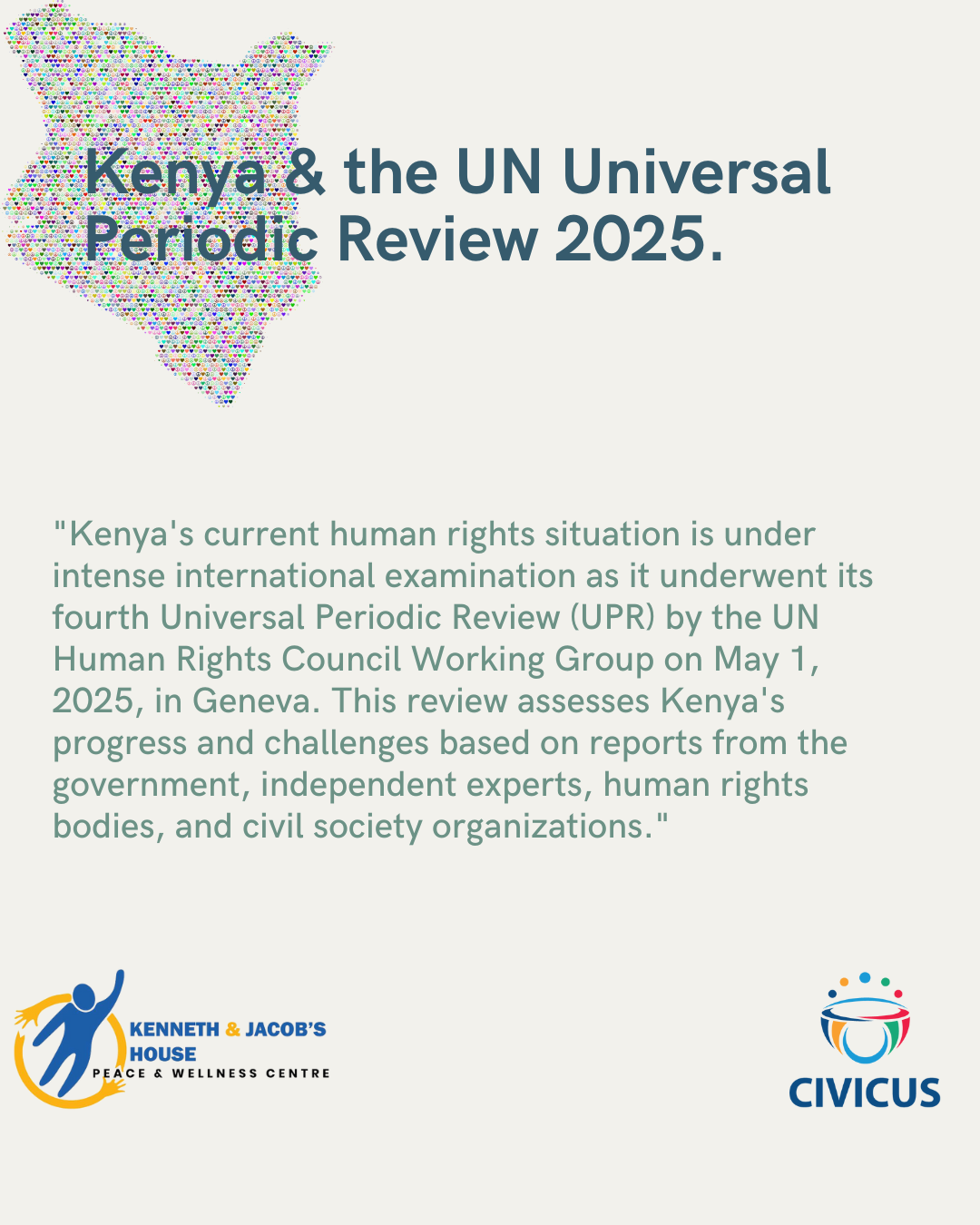
Kenya’s current human rights landscape is facing renewed international scrutiny following its fourth Universal Periodic Review (UPR) by the United Nations Human Rights Council Working Group. Held on 1 May 2025 in Geneva, this review serves as a global accountability mechanism, assessing Kenya’s progress and challenges in the promotion and protection of human rights.
The UPR brings together reports from the Kenyan government, independent human rights experts, civil society organisations, and UN stakeholders to provide a detailed view of the country’s human rights situation. It highlights emerging gaps, measures progress and offers recommendations on how to better protect the rights of all people in Kenya including those often left at the margins, such as LGBTQ+ individuals, refugees and internally displaced persons.
One of the notable developments in the lead-up to the 2025 review was Kenya’s recent vote at the UN in support of renewing the mandate of the Independent Expert on protection against violence and discrimination based on sexual orientation and gender identity (IE SOGI).
Even though same-sex relations remain criminalised under Kenyan law with penalties of up to 21 years in prison the government’s vote aligned Kenya with 28 other countries supporting the mandate. This is an important symbolic shift, signalling a subtle but visible openness to international standards on LGBTQ+ rights and an increasing willingness to engage on the issue at multilateral level.

For LGBTQ+ youth and activists in Kenya, this decision provides a key moment of hope. It demonstrates that global advocacy and civil society efforts are not in vain, and that the voices of marginalised communities are beginning to influence positions at international spaces.
However, symbolism is not enough it must translate into tangible reforms on the ground. Much work remains to repeal discriminatory laws, dismantle systemic violence and ensure meaningful participation of LGBTQ+ people in decision making processes.

At Kenneth & Jacob’s House, we believe the UPR is an important tool for collective advocacy and accountability. It gives civil society the opportunity to bring the lived realities of LGBTQ+ communities forward and remind the Kenyan government of its obligation to uphold equality, dignity and non-discrimination.

 Kenneth And Jacob's House